PTEB Builds
How We Built the World's Fastest Tiguan R
· 4 min read · PTEB Tuning
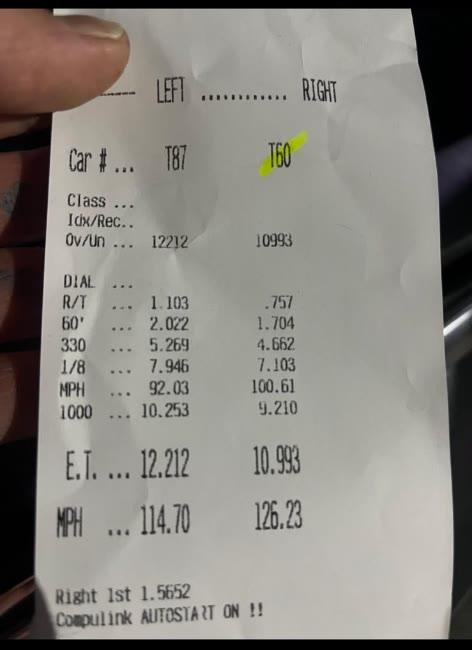
On 5 August 2026 at Sydney Dragway, a PTEB-tuned Volkswagen Tiguan R ran the quarter mile in 10.993 seconds at 203.1 km/h — the fastest recorded Tiguan R. It did it on an unopened factory motor, an unopened factory gearbox and street tyres. This is how it came together, and why it matters for every car we tune.
Why a Tiguan R?
Nobody lines up at a drag strip expecting an SUV to run 10s. That was the point. The Tiguan R is a family car: tall, heavy for its class, and bought for school runs and road trips, not quarter-mile slips.
Underneath, though, it shares the Volkswagen Group's performance hardware: the EA888 2.0-litre turbo engine, 4Motion all-wheel drive and a DSG dual-clutch gearbox. That's the same family of parts we calibrate every week in Golf Rs, Audi S3s and Arteon Rs. If we could make a Tiguan R the fastest of its kind without opening the engine or gearbox, it would prove something about the calibration rather than the parts.
The rule: don't open the motor or the gearbox
Big quarter-mile times usually come from built engines — forged pistons and rods, strengthened gearboxes, drag radials or slicks. We set ourselves the opposite challenge. The motor and the gearbox stay exactly as they left the factory. The car stays on street tyres.
That rule shifts all the pressure onto the calibration. Every extra kilowatt has to be made safely on factory internals, and every bit of torque has to be delivered in a way a factory gearbox and road tyres can handle.
The entire build
The full parts list is short — deliberately so:
- EQT660 turbo upgrade — a larger turbo to move the airflow needed for Stage 3 power.
- E85 flex fuel system — an ethanol sensor and fuel upgrades so the car runs any blend of E85 and petrol.
- PTEB Stage 3 flex calibration — engine and DSG calibrated together on the dyno.
- Unopened factory motor — no built internals, no strengthened bottom end.
- Unopened factory gearbox — no upgraded transmission hardware.
- Street tyres — no drag radials, no slicks.
Why E85 was essential
On factory internals, knock is the enemy. E85 resists knock far better than 98 RON petrol and cools the intake charge as it evaporates, which lets the calibration run more timing and boost without pushing the engine into danger.
Flex fuel means the car isn't tied to E85. The ECU reads the ethanol content in real time and blends between its maps, so it can still be filled with petrol when E85 isn't available.
On the dyno: 346.5 kW at the wheels
Before the car went near a strip, it was calibrated and verified on the dyno. It made 346.5 kW and 553.4 Nm at the wheels. Just as important as the peak was what the logs showed: stable air-fuel ratios, controlled intake temperatures and no knock across repeated runs.
The DSG was calibrated alongside the engine. Raising clutch clamping and torque limits is what lets a factory gearbox hold that power without slipping — and shift fast enough to make it count.
From 11.187 to 10.993
The record didn't come on the first visit. On 17 June 2026 the Tiguan ran 11.187 seconds at 123.02 mph (about 198 km/h), with a 1.729-second 60-foot time. Already quick for any SUV — but not where we knew it could be.
Between visits the calibration was refined using the logs from that night. On 5 August it ran 10.993 seconds at 126.23 mph (203.1 km/h). The 60-foot time improved to 1.704 seconds, and the trap speed went up by more than three miles an hour.
- 60ft: 1.729s → 1.704s
- Quarter mile: 11.187s → 10.993s
- Trap speed: 123.02 mph → 126.23 mph (203.1 km/h)
The record run, split by split
Every split from the 5 August timing slip, printed by Compulink Autostart timing at Sydney Dragway:
- 60ft: 1.704s
- 330ft: 4.662s
- ⅛ mile: 7.103s @ 161.9 km/h (100.61 mph)
- 1000ft: 9.210s
- ¼ mile: 10.993s @ 203.1 km/h (126.23 mph)
Street tyres make it harder
All-wheel drive helps a heavy car launch, but street tyres still limit how much torque can be used off the line. Much of the work in a run like this is managing torque delivery in the first few gears so the tyres hook instead of spinning. That's calibration work, not hardware.
It also means there's more to come. On drag radials, we expect this car to go quicker still.
What this means for your car
The Tiguan R wasn't calibrated with a special process. It went through the same steps every PTEB customer car does: health check, baseline, calibration on our in-house Mainline dyno, repeatability runs, and road validation — with the engine and gearbox tuned together.
Whether you drive a Golf R, an S3 or a Tiguan R, the lesson is the same: the calibration is what turns hardware into results.